Frequently Asked Questions
Calibration, service, and instrument support questions
Find answers about on-site calibration, mail-in lab service, documentation, NIST traceability, troubleshooting, installation, emergency service, and the types of instruments Calibrations & Controls supports.
Send the instrument type, manufacturer, model, tag number, and whether you need on-site or mail-in service.
Request a Quote1. About Calibrations & Controls
What is Calibrations & Controls?
Calibrations & Controls is a full-service instrumentation company based in Buffalo, Minnesota. We provide calibration services, troubleshooting and repair, instrument installation, commissioning, and instrument sales to facilities across Minnesota and the upper Midwest. We have been in business since 1997 and are a family-owned S Corporation.
When was Calibrations & Controls founded?
The company was incorporated in Minnesota on January 18, 1997. We have been serving customers in the instrumentation space for nearly 30 years.
Who owns and operates the company?
Calibrations & Controls is family-owned and operated. Brad White serves as President and CEO. Garrett White serves as Operations Manager. The company has remained independently owned and operated throughout its history.
Where are you located?
Our office and lab are located at 1124 50th St NE, Buffalo, MN 55313.
How can I contact you?
You can reach us by phone at 763-972-1001 or 763-479-1003. For sales and service inquiries, email us at sales@calibrationsandcontrols.com. You can also visit our website at calibrationsandcontrols.com.
Do you have a physical lab?
Yes. We have a lab at our Buffalo, MN location where we process mail-in calibrations and maintain our reference equipment.
Are you a small business?
Yes. Calibrations & Controls is a small, independently owned business. That means you work with people who care about the outcome of every job, not a call center or a national chain. Our team is accessible, responsive, and accountable.
What makes Calibrations & Controls different from a large national calibration company?
We offer the personal service and accountability of a small business alongside the technical capability and documentation quality of a larger provider. You deal with real people, get direct answers, and do not get lost in a ticketing system. We treat each customer as a long-term relationship, not a transaction.
How do I follow you on social media?
You can find us on LinkedIn, Instagram, and Facebook. Search for Calibrations & Controls or visit calibrationsandcontrols.com for links.
2. What Is Calibration?
What is instrument calibration?
Calibration is the process of comparing a measurement instrument against a known reference standard to determine how accurately it is performing. The result is documented data showing where the instrument reads correctly, where it is off, and by how much.
Why does calibration matter?
Instruments drift over time. Heat, vibration, process conditions, mechanical wear, and age all cause measurement devices to shift away from their true values. If your instruments are not calibrated regularly, you may be operating on bad data without knowing it. That can lead to out-of-spec products, process failures, compliance violations, and safety risks.
What is the difference between calibration and verification?
Verification checks whether an instrument is reading accurately but does not make any adjustments. Calibration includes verification plus adjustment if the device is out of tolerance. Some instruments are designed to be verified but not field-adjusted. In those cases, verification with documentation is the appropriate scope of work.
What does "as-found" mean?
As-found refers to the condition of an instrument before any adjustments are made. Capturing as-found data is important because it tells you how the instrument was actually performing in service. This is the baseline before any calibration work begins.
What does "as-left" mean?
As-left refers to the condition of an instrument after calibration adjustments are completed. This confirms the instrument is performing within tolerance before it is returned to service.
What is a calibration certificate?
A calibration certificate is a formal document that records the results of a calibration event. It typically includes the instrument identification, the date of calibration, the reference standard used, as-found readings, as-left readings, the tolerance applied, and a pass or fail determination.
What is instrument drift?
Drift is the gradual change in an instrument's output over time without any deliberate change to the process. All instruments drift to some degree. The rate of drift depends on the instrument type, age, operating conditions, and manufacturer design. Regular calibration catches drift before it causes problems.
What is a calibration interval?
A calibration interval is how often a specific instrument should be calibrated. It may be set by the manufacturer, by a regulatory body, by your facility's quality program, or based on historical performance data. Common intervals are quarterly, semi-annual, or annual, though some applications require more frequent checks.
How do I know if my instrument needs calibration?
Some signs include erratic readings, readings that do not match expectations, process upsets that cannot be explained by the process itself, failed audits or compliance checks, or simply the passage of time since the last calibration. When in doubt, a verification check is a low-cost way to confirm whether an instrument is still within tolerance.
Can a calibration "fix" a bad reading?
Calibration can correct an instrument that is out of adjustment. However, if the root cause is a failed sensor, physical damage, contamination, or a hardware defect, calibration alone will not resolve it. In those cases, troubleshooting or repair is the right path.
What is span adjustment?
Span adjustment corrects the full-scale output of an instrument. If an instrument reads accurately at zero but is off at the high end of its range, a span adjustment brings the upper end back into alignment.
What is zero adjustment?
Zero adjustment corrects the baseline reading of an instrument when there is no measurable input. An instrument that reads 0.5 PSI when there is no pressure applied, for example, has a zero offset that needs to be corrected.
What is a 4-20 mA loop?
A 4-20 mA loop is a standard analog signal used in industrial instrumentation to transmit measurement data. The signal ranges from 4 milliamps (representing the low end of the measurement range) to 20 milliamps (representing the high end). Calibration of 4-20 mA loops confirms that the instrument output corresponds accurately to the physical measurement.
What is traceability?
Traceability is the documented chain of comparisons connecting your instrument's calibration to a nationally or internationally recognized measurement standard, typically maintained by NIST (the National Institute of Standards and Technology). A traceable calibration means you can demonstrate that your measurements are tied to an accepted reference.
3. Services Overview
What services does Calibrations & Controls offer?
We offer on-site calibration, mail-in lab calibration, instrument troubleshooting, repair, installation, commissioning, and instrument sales. We also provide emergency service for urgent situations and can support compliance documentation requirements.
Do you handle both on-site and lab calibration?
Yes. We offer both. On-site calibration is performed at your facility with our portable reference equipment. Mail-in calibration is performed in our lab at our Buffalo, MN location. We will help you determine which option makes the most sense for your situation.
Do you service all brands of instruments?
Yes. We service all brands and manufacturers. We are not tied to a single vendor or product line, which means we can work on whatever equipment you have in the field.
Can you handle a large list of instruments in one visit or one shipment?
Yes. Batching instruments into a single on-site visit or a single mail-in shipment is one of the most efficient ways to manage your calibration program. It reduces scheduling overhead, travel costs, and downtime. We encourage customers to consolidate work whenever possible.
Do you work with small facilities as well as large ones?
Yes. We work with customers of all sizes, from small municipal operations and independent facilities to large industrial plants. We do not have a minimum job size.
Can you help me set up an ongoing calibration program?
Yes. We can help you develop a calibration schedule based on your instrument inventory, your compliance requirements, and your operational needs. Regular calibration programs help you stay ahead of drift, reduce unplanned downtime, and be prepared for audits.
Do you provide any kind of calibration management or tracking service?
We can work with you to track calibration due dates, maintain service records, and help manage your calibration schedule. Contact us to discuss what level of ongoing support fits your needs.
Can you calibrate instruments that are still in service without taking them offline?
In many cases, yes. Some instruments can be verified in place without disrupting the process. For others, brief shutdowns or bypasses are required. This depends on the instrument type, installation, and process requirements. We will work with your team to minimize disruption.
4. On-Site Calibration Services
What is on-site calibration?
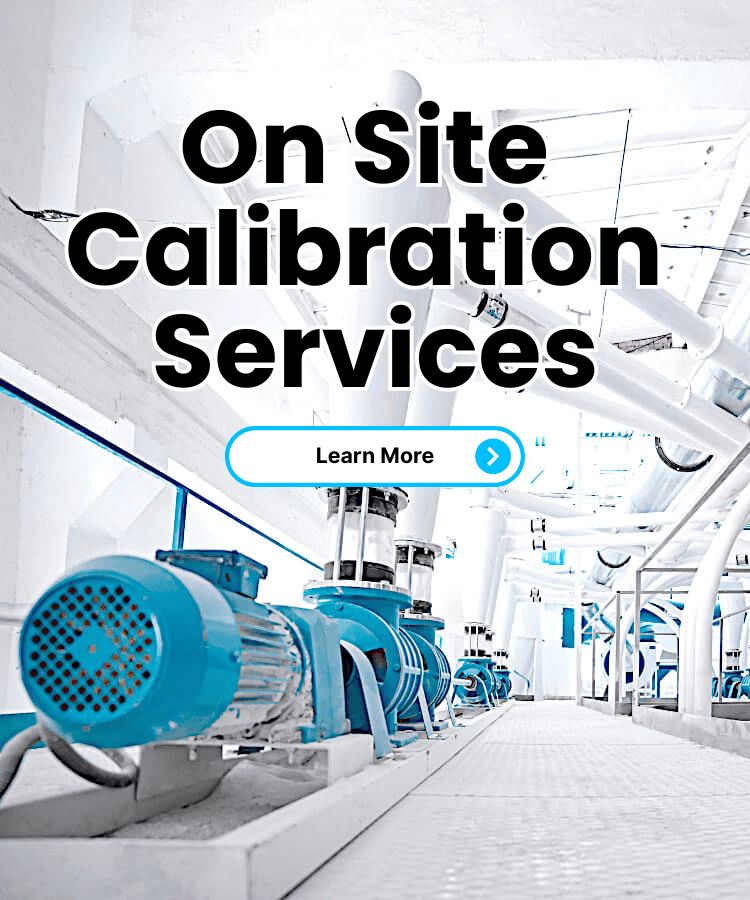
On-site calibration is performed at your facility. A technician brings the necessary reference equipment and calibrates your instruments in place, without requiring you to remove and ship them. This is ideal for instruments that are difficult to remove, large, installed in critical processes, or simply more convenient to service in the field.
What are the advantages of on-site calibration?
On-site calibration eliminates shipping risk, avoids removal and reinstallation costs, allows the technician to observe actual installation conditions, and keeps your instruments in service for as long as possible. It is also the right choice when instruments are too large, too heavy, or too integrated to be easily removed.
How do I schedule an on-site visit?
Contact us at sales@calibrationsandcontrols.com or call 763-972-1001 to discuss your needs and arrange a site visit. We will confirm the scope, instrument list, and timing in advance.
How much advance notice do you need to schedule an on-site visit?
We recommend contacting us at least a few weeks in advance for planned calibration visits, especially if you have a large instrument count or specific scheduling constraints. That said, we can often accommodate shorter timelines and do offer emergency response for urgent situations.
Do you charge for travel?
Travel may be included in or added to service pricing depending on location, distance, and the scope of work. This will be clearly communicated during the quoting process.
What should I have ready before your technician arrives?
It helps to have an instrument list ready, know the process conditions for each instrument, ensure access to the measurement locations, and have any necessary safety permits or site access procedures arranged in advance. If you have specific manufacturer documentation or tolerance requirements, having those available is also helpful.
Can you calibrate instruments in hazardous or classified locations?
We work in a variety of industrial environments. If your site has classified areas or special access requirements, let us know during the scheduling process so we can ensure our technician is prepared and equipped appropriately.
Do you bring your own reference equipment?
Yes. We bring calibrated, NIST-traceable reference equipment appropriate for the instruments being serviced. You do not need to supply test equipment.
Can you calibrate instruments while they are running on the process?
For many instrument types, in-service verification or calibration is possible. For others, the instrument must be isolated or removed from service. We will advise you on what is required for each instrument type before the visit.
5. Mail-In Lab Calibration Services
What is mail-in calibration?
Mail-in calibration means you ship your instruments to our lab in Buffalo, MN. We calibrate them in our controlled lab environment and return them to you with documentation. It is typically the most cost-effective option for instruments that are easy to remove and ship.
What are the advantages of mail-in calibration?
Mail-in calibration tends to be lower cost than on-site service and is ideal for smaller, portable, or easily removed instruments. It also allows us to service customers across a wider geography without travel overhead.
How do I send in my instruments?
Contact us at sales@calibrationsandcontrols.com to initiate a mail-in service request. We will provide you with shipping instructions and an RMA number. Pack your instruments carefully and include your contact information, a description of each instrument, and any specific requirements or concerns.
What is an RMA number?
RMA stands for Return Merchandise Authorization. It is a reference number we assign to your shipment so we can track your instruments through our intake process and match them to your service record. Always include your RMA number with your shipment.
How do I pack my instruments for shipping?
Pack each instrument in protective padding or foam to prevent damage during transit. Use appropriate box sizes to avoid shifting. If an instrument has fragile components such as sensors, glass elements, or exposed probes, protect those specifically. When in doubt, call us and we will advise on packaging for your specific instrument type.
What carrier should I use to ship my instruments?
We recommend using a carrier with tracking and, for valuable instruments, insurance coverage. UPS, FedEx, and USPS Priority Mail with tracking are all acceptable. Ship to our address at 1124 50th St NE, Buffalo, MN 55313.
Who pays for shipping?
Customers are generally responsible for inbound shipping to our lab. We arrange and cover return shipping. Specific arrangements can be discussed during the quoting process for larger programs.
How will my instruments be returned to me?
We will ship your instruments back to your preferred address via a tracked carrier. Calibration documentation will be included with the shipment and may also be provided electronically.
Can I drop off instruments in person?
Yes. If you are local to the Buffalo, MN area, you are welcome to drop off and pick up instruments directly at our location. Contact us in advance so we can have your intake prepared.
Is mail-in calibration less thorough than on-site?
No. The technical quality of the calibration is the same. The difference is the environment. Lab calibration is performed under controlled conditions, which can actually be advantageous for sensitive instruments. On-site calibration has the advantage of observing real installation conditions. We will help you choose the right option for each instrument.
6. Instrument Types We Service
What types of instruments do you calibrate?
We calibrate a wide range of instruments including flow meters, pressure instruments, gas monitors and detectors, pH probes and analyzers, temperature instruments, dissolved oxygen sensors, conductivity meters, weight scales, chart recorders, data loggers, and level instruments. If your instrument is not on this list, contact us and we will let you know whether it falls within our scope.
Do you calibrate flow meters?
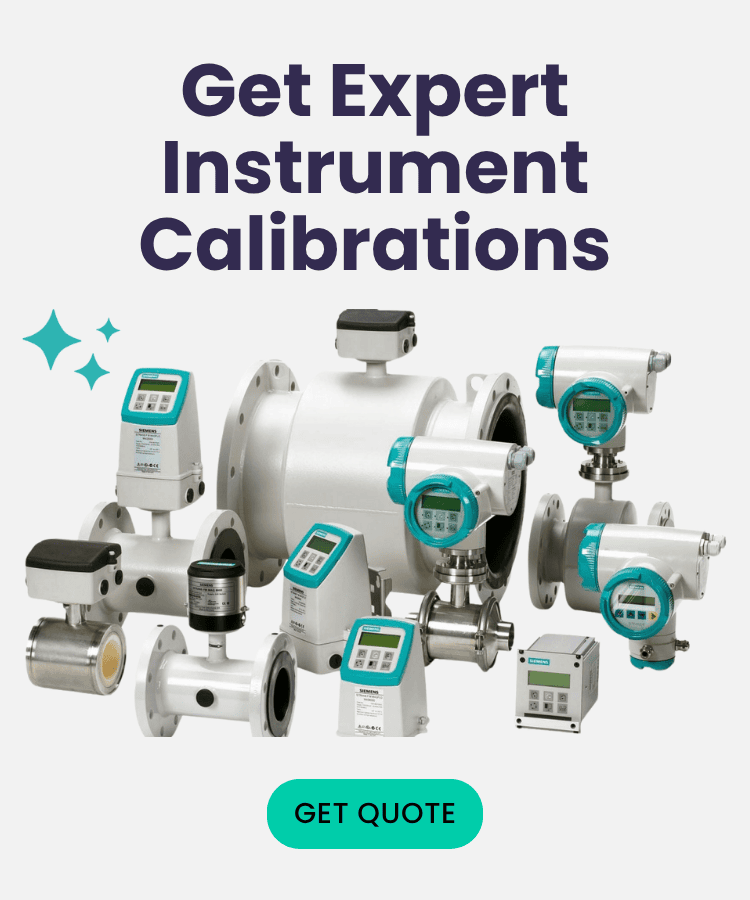
Yes. Flow meters are one of our primary service categories. We work with a variety of flow measurement technologies including magnetic, ultrasonic, vortex, differential pressure, turbine, and others. We use NIST-traceable reference equipment appropriate for the flow technology being tested.
What kinds of flow meters do you service?
We work with magnetic flowmeters, ultrasonic flowmeters (both clamp-on and wetted), differential pressure-based flow measurement, vortex flowmeters, turbine meters, and others. If you have a flow measurement device and are not sure whether we can service it, contact us.
Do you calibrate pressure instruments?
Yes. We calibrate pressure gauges, transmitters, switches, and transducers across a range of pressure types including gauge pressure, differential pressure, and absolute pressure.
Do you calibrate gas monitors and detectors?
Yes. We service gas detection and monitoring equipment including combustible gas detectors, oxygen monitors, toxic gas sensors, and multi-gas monitors. Gas monitors require regular calibration with certified calibration gas to maintain accuracy and meet safety requirements.
What calibration gases do you use for gas detector calibration?
We use certified calibration gas mixtures with NIST-traceable concentrations. The specific gas mixture used depends on the sensors installed in your detector. We will confirm the appropriate calibration gas for your equipment prior to service.
Do you calibrate pH instruments?
Yes. We service pH probes, sensors, and analyzers. pH calibration typically involves buffer solutions at known pH values and verification of probe response across the measurement range.
Do you calibrate temperature instruments?
Yes. We calibrate temperature transmitters, thermocouples, RTDs, and temperature switches. Reference standards appropriate to the temperature range and sensor type are used to verify accuracy.
Do you calibrate dissolved oxygen sensors?
Yes. Dissolved oxygen (DO) instruments are commonly used in water and wastewater treatment and other environmental monitoring applications. We calibrate both membrane-style and optical DO sensors.
Do you calibrate conductivity meters?
Yes. Conductivity instruments are used in water quality monitoring, industrial process control, and chemical applications. We verify conductivity sensors against traceable reference standards.
Do you calibrate weight scales?
Yes. We service industrial and commercial weight scales. Calibration involves applying known reference weights across the measurement range and verifying the scale's output.
Do you service chart recorders and data loggers?
Yes. Chart recorders and data loggers that measure and record process variables such as temperature, pressure, humidity, and flow can be calibrated or verified through our service.
Do you calibrate level instruments?
Yes. Level transmitters and sensors are used across many industries to monitor tank and vessel levels. We service ultrasonic, pressure-based, guided wave radar, and other level measurement technologies.
What if I have an instrument type not listed here?
Contact us and describe the instrument. We will let you know whether it falls within our current service scope or whether we can refer you to a provider better suited for that specific technology.
Can you calibrate instruments from any manufacturer?
Yes. We are manufacturer-independent and service all brands. We also use OEM verificators and manufacturer-specific procedures when they are available, which improves accuracy and credibility of the calibration.
Do you use OEM (manufacturer) verification tools?
Yes, when available. OEM verification tools are designed specifically for a manufacturer's instruments and often provide the most accurate and defensible calibration results. We invest in OEM tools for common instrument types and use them where appropriate.
7. Service Levels
What service levels do you offer?
We offer three service levels: Basic, Advanced, and Ultimate. Each level differs in the number of test points, depth of documentation, and included services. We will help you choose the right level based on your requirements, budget, and compliance needs.
What is included in the Basic service level?
The Basic level is a budget-oriented option with fewer test points and a lighter documentation footprint. It is suitable for low-criticality instruments or applications where compliance documentation requirements are minimal. It may not include 4-20 mA output verification or the full as-found/as-left data set.
What is included in the Advanced service level?
The Advanced level is our most commonly recommended option. It includes OEM procedures and verificators where available, multiple test points across the full measurement span, 4-20 mA loop verification and adjustment, and detailed as-found/as-left documentation. This is the appropriate level for most industrial and municipal applications.
What is included in the Ultimate service level?
The Ultimate level is designed for high-documentation environments such as facilities with active audit programs, ISO compliance requirements, or stringent regulatory oversight. It includes everything in the Advanced level plus more comprehensive calibration schedules, greater documentation depth, and support for ongoing compliance programs. This level is typically chosen by larger organizations with formal quality management systems.
Which service level should I choose?
For most customers, the Advanced level is the right fit. It provides solid technical depth, full documentation, and reliable as-found/as-left data. If you have a specific compliance or audit requirement, we can help you determine whether the Ultimate level is necessary. Basic is best reserved for instruments with minimal criticality or facilities with tight budget constraints.
Can I mix service levels across different instruments in my facility?
Yes. It is common to apply different service levels to different instruments based on their criticality, application, and compliance requirements. We can help you think through which instruments warrant higher-level service and which can be handled at the Basic level.
8. Turnaround Times & Expedited Service
What is your standard turnaround time for mail-in calibration?
Standard mail-in turnaround is approximately 5 to 7 business days from the time your instruments arrive at our lab, though some jobs may run up to 7 to 10 business days depending on volume and complexity.
Do you offer expedited calibration?
Yes. We offer expedited mail-in turnaround of approximately 3 business days for an additional per-device fee. If you have a tight deadline, contact us before shipping so we can confirm availability and plan accordingly.
How much does expedited service cost?
Expedited service is available for an additional fee per device. Contact us at sales@calibrationsandcontrols.com for current pricing on expedited turnaround.
What if I have an emergency and need same-day or next-day service?
For urgent situations, contact us directly by phone at 763-972-1001. We offer emergency service and will do our best to accommodate critical needs. Emergency on-site response may also be available depending on location and availability.
Does turnaround time include shipping time?
No. Turnaround time begins when your instruments arrive at our lab. Shipping time to and from our facility is in addition to the lab turnaround window. Plan accordingly, especially if you have regulatory deadlines.
How will I know when my instruments are ready?
We will contact you when your instruments are complete and ready to ship. You will receive your calibration documentation at that time as well.
Can I check on the status of my instruments while they are at your lab?
Yes. If you have questions about your instruments' status, contact us at sales@calibrationsandcontrols.com or by phone and we will provide an update.
What factors affect turnaround time?
Factors that may extend turnaround include high incoming volume, instruments requiring additional troubleshooting or repair, the need to source replacement parts, and instruments that require a longer stabilization or warm-up period. We will communicate proactively if any of these situations arise.
9. Calibration Documentation & Certificates
What documentation do I receive after calibration?
After calibration, you will receive a calibration record that includes the instrument identification information, calibration date, reference standard used, as-found readings at each test point, as-left readings at each test point, the tolerance applied, and a pass or fail determination.
Is the calibration certificate traceable?
Yes. Our calibration documentation is tied to NIST-traceable reference equipment. The calibration certificates we issue reflect the traceability chain back to recognized national standards.
Can you provide documentation in a specific format required by our quality system?
We can discuss custom documentation formats if your quality system has specific requirements. Contact us to describe what you need and we will determine whether we can accommodate it.
How long do you keep calibration records?
Contact us to discuss your specific record retention requirements. We maintain records of work performed and can provide duplicate documentation if needed.
What is recorded at each test point?
At each test point we record the reference input applied, the instrument's actual reading, and whether it falls within the specified tolerance. Before adjustment this is the as-found reading. After adjustment this is the as-left reading.
What tolerance do you apply?
By default, we apply the manufacturer's published tolerance for the instrument being calibrated. If your quality program requires a tighter or different tolerance, you can supply that specification and we will calibrate to it.
Does a passing calibration mean my instrument is perfectly accurate?
A passing calibration means the instrument's readings fall within the specified tolerance at the time of calibration. All measurements contain some level of uncertainty, and instruments are considered acceptable when they are within the defined tolerance band, not necessarily at zero error.
What happens if my instrument fails calibration?
If an instrument fails, the calibration record will document the out-of-tolerance readings. Depending on the instrument and the extent of the failure, we may be able to adjust the instrument to bring it back within tolerance. If adjustment is not sufficient or not possible, we will advise you on repair or replacement options.
Do you provide electronic copies of calibration certificates?
Yes. We can provide calibration documentation electronically in addition to or instead of paper documentation. Contact us to specify your preference.
10. Nist Traceability & Standards
What does NIST-traceable mean?
NIST stands for the National Institute of Standards and Technology, the U.S. federal agency responsible for maintaining national measurement standards. NIST-traceable means that our reference equipment has been calibrated against standards that can be traced back to NIST, creating an unbroken chain of comparison to a recognized national standard.
Why is NIST traceability important?
Traceability is the foundation of measurement credibility. When your instruments are calibrated against NIST-traceable standards, you can demonstrate to auditors, regulators, and customers that your measurements are tied to a recognized national benchmark. It is a basic requirement in most industrial quality and compliance programs.
Are you ISO 17025 accredited?
We are not currently ISO 17025 accredited. NIST traceability is our primary credibility marker, and our calibration documentation reflects that traceability chain. For customers requiring ISO 17025 accredited calibration, we will be transparent about our current status and help you determine whether our services meet your requirements.
What is ISO 17025?
ISO 17025 is an international standard for testing and calibration laboratories. It covers technical competence, measurement uncertainty, equipment management, quality management systems, and impartiality requirements. Accreditation under ISO 17025 is granted by an accreditation body after formal assessment of the laboratory.
Does NIST traceability satisfy most compliance requirements?
For the majority of industrial, municipal, and process applications, yes. Most regulatory and quality programs require traceable calibration, and NIST-traceable documentation satisfies that requirement. If you have a specific accreditation or certification requirement that mandates ISO 17025, let us know and we can discuss whether we are the right fit.
How do I verify your reference equipment is calibrated?
Our reference equipment has current calibration certificates. If you require documentation of the reference standards used during your calibration, we can provide that information upon request.
What is measurement uncertainty?
Measurement uncertainty is a quantification of how much the true value of what you are measuring could differ from the measured result, given the limitations of the measurement system. All measurements have some uncertainty. Understanding and documenting uncertainty is part of a rigorous calibration program.
How often is your reference equipment calibrated?
Our reference equipment is calibrated on a regular schedule to maintain traceability and accuracy. We track the calibration status of our reference standards and remove equipment from service when it is due for recalibration.
11. Troubleshooting & Repair
Do you troubleshoot instruments that are not working correctly?
Yes. Troubleshooting is one of our core services. If an instrument is reading incorrectly, behaving erratically, failing outputs, or showing other signs of malfunction, we can investigate the cause and advise on a path to resolution.
What kinds of problems can you troubleshoot?
We troubleshoot a wide range of instrument issues including signal drift, failed outputs, communication errors, sensor degradation, wiring and loop problems, configuration errors, installation-related issues, and intermittent faults.
Can you troubleshoot an instrument on-site?
Yes. On-site troubleshooting is available. A technician can come to your facility, observe the instrument in its actual operating environment, and diagnose the issue in context. This is often the most effective approach for complex or intermittent problems.
Can I send in an instrument for troubleshooting?
Yes. If the instrument can be removed and shipped, our lab can perform troubleshooting and evaluation. Contact us before shipping to describe the issue so we can set appropriate expectations.
Do you repair instruments?
Repair capability depends on the instrument type, manufacturer, and nature of the fault. We can perform certain repairs and adjustments in the field or in our lab. For repairs requiring manufacturer-specific parts or factory service, we will advise you on the most appropriate path.
What if the instrument cannot be repaired?
If an instrument is beyond repair or the repair cost is not economical, we will let you know. We can help with replacement recommendations and, in many cases, supply a replacement instrument through our sales channel.
Can you diagnose why my instrument keeps drifting or failing?
Yes. Recurring failures often point to root causes beyond the instrument itself, such as harsh process conditions, installation problems, inappropriate instrument selection, or interference from nearby equipment. We can help identify and address underlying causes, not just treat the symptom.
What is a loop check?
A loop check verifies that the entire measurement loop is functioning correctly, from the sensor through the transmitter, wiring, and control system input. It confirms that the signal being received at the control system accurately reflects what the sensor is measuring. Loop checks are important during commissioning and troubleshooting.
Can you help diagnose communication errors on HART or digital instruments?
Yes. We work with instruments that use HART communication and can assist with configuration, diagnostics, and troubleshooting of HART-enabled devices.
Do you troubleshoot control system integration issues?
We primarily focus on the instrument side of the measurement loop. For deeper control system integration issues, we can work in coordination with your controls team or systems integrator to identify where the problem originates.
12. Installation & Commissioning
Do you install instruments?
Yes. We provide instrument installation services for new equipment in both new construction and retrofit applications. Proper installation is essential for accurate, reliable measurement, and we ensure instruments are installed according to manufacturer specifications and best practices.
What types of instruments do you install?
We install the same categories of instruments we calibrate: flow meters, pressure instruments, gas monitors, pH sensors, temperature instruments, dissolved oxygen sensors, conductivity meters, level instruments, scales, and more.
What is commissioning?
Commissioning is the process of bringing a newly installed instrument or system into service. It includes verifying the installation, configuring the instrument, performing initial calibration, conducting loop checks, and confirming the instrument is performing as expected under actual process conditions before handing it over for ongoing operation.
Why is commissioning important?
An instrument that is properly installed but incorrectly configured or uncalibrated will still produce bad data. Commissioning ensures that everything is working correctly from the start, reducing the risk of early failures, inaccurate readings, and costly troubleshooting down the line.
Can you both install and commission the same instrument?
Yes. We can handle the full process from installation through commissioning in a single engagement. This is often more efficient than having separate contractors handle each phase.
Can you help select the right instrument for a given application before purchase?
Yes. Instrument selection is part of what we do. Choosing the wrong instrument for a process can lead to chronic accuracy problems, maintenance headaches, and premature failure. We can review your application requirements and recommend appropriate technology and specifications.
Do you work with system integrators and contractors?
Yes. We work alongside system integrators, general contractors, and engineering firms on projects requiring instrumentation installation and commissioning. We are comfortable operating as a specialty subcontractor or as the lead instrumentation resource on a project.
Can you commission existing instruments that were never properly set up?
Yes. It is common to encounter instruments that were installed but never properly calibrated or configured. We can perform a retroactive commissioning to bring them into proper service.
13. Instrument Sales
Do you sell instruments?
Yes. We sell instruments in addition to providing calibration and service. Buying through us allows you to source the instrument and arrange for installation and commissioning in a single relationship.
What types of instruments do you sell?
We can source and supply instruments across the same categories we service, including flow meters, pressure instruments, gas detectors, pH instruments, temperature sensors, level instruments, and others. Contact us with your requirements and we will provide options.
Do you sell a specific brand, or are you manufacturer-independent?
We are manufacturer-independent. We do not favor one brand over another, which means we recommend based on your application requirements and what will perform best in your specific situation.
Can you help me find a replacement for an obsolete instrument?
Yes. Obsolescence is a common challenge. We can help identify compatible replacements that match the performance requirements of the original instrument and fit the existing installation if possible.
Can I purchase an instrument and have you install and calibrate it?
Yes. We can handle the full cycle: supply, installation, and commissioning calibration. This is one of the most efficient ways to add a new instrument to your facility.
Do you keep instruments in stock?
Stock availability depends on the instrument type and manufacturer. Contact us with your specific requirements and we will confirm lead times.
14. Emergency Service
Do you offer emergency service?
Yes. We offer emergency service for urgent situations. If a critical instrument fails and you need immediate support, contact us by phone at 763-972-1001 as soon as possible.
What counts as an emergency?
An emergency is any situation where a failed or inaccurate instrument is causing or threatening to cause a process shutdown, safety hazard, compliance violation, or significant operational impact. If your situation feels urgent, call us and we will assess what we can do.
How quickly can you respond to an emergency?
Response time depends on our technician availability and your location. For customers in our primary service area in Minnesota, we can often respond faster than for locations farther out. Call us directly at 763-972-1001 for the most current availability.
Is emergency service available outside of normal business hours?
Contact us directly for after-hours emergency needs. We will do our best to support critical situations.
Is there an additional cost for emergency response?
Emergency response may carry additional charges for after-hours, weekend, or short-notice response. This will be communicated clearly when you contact us.
What should I do while I wait for emergency service?
Keep detailed notes of what the instrument was doing before and after the failure, any alarms or error codes displayed, any recent changes to the process, and any actions already taken. This information will help us diagnose and resolve the issue faster when we arrive.
15. Geographic Coverage
Where do you provide on-site service?
Our primary on-site service territory includes Minnesota and surrounding states: South Dakota, North Dakota, Wisconsin, Michigan, and Iowa. We are based in Buffalo, MN and serve customers throughout the region.
Do you travel outside of your primary service area?
For the right project or customer relationship, we can discuss travel outside our primary service area. Contact us to discuss your location and scope.
Can customers outside your on-site territory still use your services?
Yes. Mail-in lab calibration is available to customers anywhere in the country. If you cannot receive on-site service due to geography, mail-in calibration is a practical and cost-effective alternative.
Is there a travel fee for on-site service?
Travel costs are factored into service pricing for on-site visits. The specifics depend on distance and the scope of work. We will communicate all costs clearly in your quote.
Are you available throughout Greater Minnesota, including rural areas?
Yes. We serve customers throughout Greater Minnesota, including rural and remote facilities. Being based in the Buffalo area means we are positioned to reach customers across a wide portion of the state efficiently.
16. Industries & Customers We Serve
What industries do you serve?
We serve any facility that uses process instrumentation. Common customer types include water and wastewater treatment facilities, municipalities and public works departments, industrial manufacturers, food and beverage processors, energy facilities, environmental monitoring operations, OEMs, and system integrators. However, this is not an exhaustive list. If your facility uses flow, pressure, gas, temperature, pH, or other process instruments, we can likely help you.
Do you work with municipal water and wastewater facilities?
Yes. Water and wastewater operations are among our most common customers. These facilities depend on accurate measurement for treatment process control, regulatory reporting to agencies such as the MPCA and DNR, and public health protection. Calibration and documentation integrity are essential in this environment.
Do you serve food and beverage facilities?
Yes. Food and beverage operations often have stringent requirements for measurement accuracy, sanitation compatibility, and documentation. We work with instruments used in food processing, including temperature, flow, pressure, pH, and conductivity devices.
Do you serve industrial manufacturing facilities?
Yes. Industrial manufacturers use instrumentation throughout their processes for control, quality assurance, safety, and compliance. We service the full range of measurement types found in manufacturing environments.
Do you work with OEMs and system integrators?
Yes. Original equipment manufacturers and system integrators often need calibration and instrumentation support during design, build, and commissioning phases. We can work as a calibration and instrumentation resource within larger project frameworks.
Do you work with environmental monitoring operations?
Yes. Environmental monitoring applications require accurate, defensible measurements and proper documentation. We work with instruments used in environmental data collection and reporting.
Do you work with energy and utility operations?
Yes. We serve customers in the energy sector, including utility operations that use process instrumentation for flow measurement, pressure monitoring, gas detection, and other applications.
Do you have a minimum customer size requirement?
No. We work with small facilities and large plants alike. Whether you have five instruments or five hundred, we can develop a service approach that works for your scale.
17. Compliance & Regulatory Work
Can you help me stay compliant with state regulatory requirements?
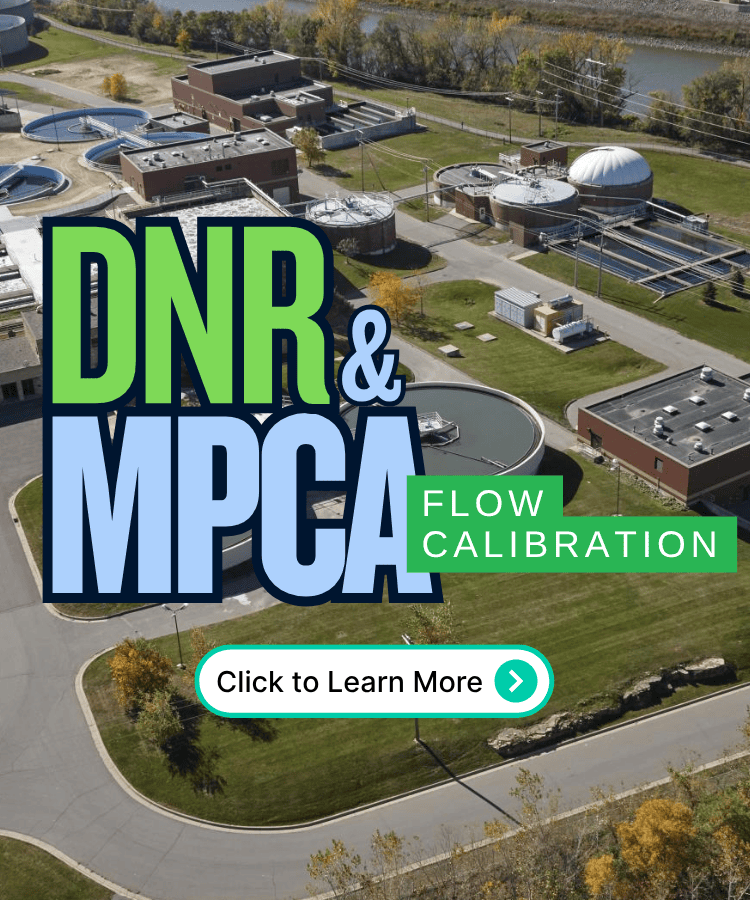
Yes. We work with many customers who operate under regulatory oversight from agencies such as the MPCA (Minnesota Pollution Control Agency) and the DNR (Minnesota Department of Natural Resources). Accurate, documented calibration is a common regulatory requirement, and our calibration records are designed to support compliance documentation needs.
What is the MPCA and why does calibration matter for it?
The MPCA is the Minnesota Pollution Control Agency. It regulates water quality, air quality, and environmental standards for facilities in Minnesota. Many permitted facilities under MPCA oversight are required to demonstrate that their measurement instruments are calibrated and traceable. Proper calibration records support permit compliance and audit readiness.
What is the DNR and why is calibration relevant?
The Minnesota Department of Natural Resources oversees natural resource use and water appropriation, among other areas. Facilities that hold DNR permits for water use or discharge are often required to maintain calibrated measurement instruments as part of their permit conditions.
Can your calibration certificates be used as documentation for audits?
Yes. Our calibration records are designed to be audit-ready. They document the instrument, reference standard, test points, tolerances, as-found and as-left readings, and calibration date in a clear format suitable for regulatory or quality system audits.
Can you help prepare for a regulatory inspection or audit?
We can help ensure your instruments are calibrated and your calibration records are current and properly organized prior to an audit. Contact us well in advance of any known inspection dates.
Do you have experience with NPDES permit requirements?
NPDES (National Pollutant Discharge Elimination System) permits often require flow measurement and water quality monitoring with documented, traceable calibration. We work with customers who operate under NPDES permit requirements regularly.
Can you help establish a calibration interval program that meets regulatory requirements?
Yes. Many regulatory programs require calibration at defined intervals. We can help you establish a calibration schedule that meets your permit conditions and keeps your records current.
What happens if an audit finds an instrument that was out of calibration?
Out-of-tolerance findings during an audit can trigger data quality investigations, reporting corrections, and in some cases regulatory consequences. The best protection is a proactive, documented calibration program. We can help you build and maintain that program.
18. Getting Started & Requesting A Quote
How do I get a quote?
Contact us at sales@calibrationsandcontrols.com or call 763-972-1001. Provide us with a list of your instruments (including manufacturer, model, and tag number if available), your location, and whether you need on-site or mail-in service. We will respond with a quote based on your specific requirements.
What information do I need to provide for a quote?
The more information you can provide, the more accurate your quote will be. Helpful details include the instrument type, manufacturer, model number, serial number or tag number, measurement range, the service you need (calibration, repair, installation, etc.), and whether you want on-site or mail-in service.
Do you provide free estimates?
We provide quotes based on the information you supply. Contact us and we will give you pricing based on your specific instrument list and scope of work.
Is there a minimum order size?
No. We do not require a minimum number of instruments or a minimum dollar value to take on a job. That said, batching multiple instruments into a single engagement is more cost-efficient for everyone.
Can I get a rough estimate before providing full instrument details?
Yes. We can provide general guidance on pricing ranges for common instrument types and service levels. For accurate pricing, we will need specific instrument information.
How long does it take to receive a quote?
We aim to respond to quote requests promptly. Contact us directly for the most current response time expectations.
Do I need a purchase order to get started?
For many customers, a purchase order or prepayment may be required before work begins. We will confirm the requirements for your specific situation during the quoting process.
What if I am not sure what service I need?
Contact us and describe the situation. We will ask the right questions and help you determine whether you need calibration, troubleshooting, repair, or something else. There is no obligation to buy anything by asking a question.
Can you accommodate customers who have never used a calibration service before?
Absolutely. Many customers are setting up a calibration program for the first time. We are happy to walk you through the process, explain what to expect, and help you build a calibration approach that makes sense for your facility.
Do you work with customers on service contracts or recurring agreements?
Yes. For customers with ongoing calibration needs, we can establish recurring service agreements that define scope, frequency, pricing, and documentation requirements. This simplifies planning and ensures your calibration program stays on track.
19. Shipping & Mail-In Logistics (Rma)
What is the mail-in calibration process, step by step?
The process is as follows: (1) Contact us to describe your instruments and request an RMA number. (2) Pack your instruments carefully and include your RMA number and contact information. (3) Ship to 1124 50th St NE, Buffalo, MN 55313 using a tracked carrier. (4) We will contact you upon receipt and confirm the scope. (5) We perform calibration in our lab. (6) We contact you when complete and ship your instruments back with documentation.
What should I include in the box when I ship my instruments?
Include a note with your name, company name, return shipping address, phone number, email, RMA number, and a description of each instrument and what you need done. If you have specific requirements, customer-supplied tolerances, or concerns about a particular instrument, note those as well.
What if my instruments arrive damaged?
We will document any damage observed upon receipt and contact you immediately. Damaged instruments may require troubleshooting or repair before calibration can proceed. This will affect turnaround time and may affect cost, which we will communicate before proceeding.
Can I track my shipment after you send it back?
Yes. We will provide tracking information when your instruments are shipped back to you.
Can I request a specific return carrier or service level?
Yes. Let us know your carrier preference or any specific shipping requirements when you initiate the mail-in request.
What if I need to ship instruments that require special handling?
Contact us before shipping if you have instruments with fragile components, hazardous materials considerations, temperature sensitivity, or other special handling requirements. We will advise on how to package and ship appropriately.
20. Billing, Payment & Terms
What are your payment terms?
Standard payment terms are Net 30. This means payment is due within 30 days of the invoice date.
What payment methods do you accept?
Contact us for current payment options. We accommodate standard business payment methods.
Do you require a deposit or prepayment?
For some customers or order types, prepayment or a purchase order may be required before work begins. This will be communicated clearly during the quoting process.
Who do I contact for billing questions?
Billing and accounts receivable questions can be directed to accrec@calibrationsandcontrols.com.
Can you invoice our purchase order system?
Yes. If your organization requires a purchase order number on the invoice, provide that when placing your order and we will include it on the invoice.
Do you offer volume discounts?
Volume may affect pricing. Contact us to discuss pricing for large instrument counts or ongoing service programs.
21. Scheduling & Site Visits
How far in advance should I schedule an on-site visit?
We recommend scheduling at least two to three weeks in advance for planned calibration visits. More lead time is better, especially for larger instrument counts or facilities with specific scheduling windows such as planned shutdowns. For emergency needs, contact us immediately.
Can you work around our planned shutdown or maintenance window?
Yes. Coordinating around planned shutdowns is a common and efficient way to perform on-site calibration, since instruments can be taken out of service without disrupting production. Let us know your shutdown schedule and we will plan accordingly.
What do you need from us before the site visit?
We need a confirmed instrument list, site access instructions, the name of a site contact, and any safety or permitting requirements for your facility. If specific manufacturer documentation or customer tolerances are required, having those available before the visit is helpful.
How long does an on-site visit take?
Duration depends entirely on the number of instruments, their types, installation complexity, and whether any troubleshooting or repairs arise during the visit. We will estimate timing when we review your instrument list during the quoting process.
Can we add instruments to the scope during the visit?
We will do our best to accommodate additional instruments if discovered on-site, though it may affect the schedule and pricing. The more complete your instrument list is before the visit, the smoother the day will go.
What if site conditions prevent access to an instrument during the visit?
We document inaccessible instruments and will coordinate with you on the best path to complete that work, whether during a follow-up visit, via mail-in service, or at a future scheduled date.
Do you work with union or safety-specific facilities?
We work with a variety of facilities including those with union rules, confined space requirements, hot work permits, lockout/tagout procedures, and other safety protocols. Inform us of any site-specific safety requirements in advance so we can arrive prepared.
22. Why Choose Calibrations & Controls
Why should I choose Calibrations & Controls over a national calibration company?
National calibration companies often route work through centralized facilities, use call centers for customer communication, and treat individual jobs as commodities. We are a local, family-owned business. You work directly with experienced people who know your equipment and your situation. You get faster communication, real accountability, and a partner who is invested in your success, not just your invoice.
What sets your calibrations apart technically?
We use NIST-traceable reference equipment, apply OEM procedures and verificators where available, capture full as-found and as-left data at multiple test points, and document everything in a format suitable for audits and compliance. We do not cut corners on documentation or test point depth because it is faster or cheaper to do so.
Are you able to handle both simple and complex calibration jobs?
Yes. We handle everything from simple single-instrument verifications to complex multi-instrument programs with compliance documentation requirements. Regardless of job size, the technical standard does not change.
How long have you been doing this?
Calibrations & Controls has been in operation since 1997. That is nearly 30 years of instrumentation experience in the field, serving customers across Minnesota and the upper Midwest.
Do you stand behind your work?
Yes. If there is an issue with work we performed, contact us immediately and we will address it. We take quality seriously and will make things right.
Can you be a long-term partner for our calibration program, not just a one-time vendor?
Absolutely. Many of our customers have worked with us for years. We prefer long-term relationships over one-off transactions because it allows us to understand your facility, your instruments, and your needs at a deeper level. That leads to better service and better outcomes for you.
Do you have references or case examples available?
Contact us and we can discuss customer experiences and application examples relevant to your industry or instrument type.
What is the best way to reach you to get started?
The fastest path is to email us at sales@calibrationsandcontrols.com or call 763-972-1001. Tell us what you have, where you are, and what you need. We will take it from there.